Malta glossary
14 entries — from arrival to Żurrieq. The essentials about Malta, Gozo and Comino.
Best time to visit
April to June and September to October are comfortable: 20 to 28 degrees, and from June the sea is warm enough for swimming. July and August regularly pass 33 degrees. Winter stays mild at around 15 degrees but is the wettest season.
Read more →Buses & local transport
A single bus network covers Malta and Gozo, with Valletta Bus Station as its hub. Tallinja cards come as single tickets, day passes or a 7-day Explore card. At night, night routes run along the main corridors.
Read more →Driving on the left
Malta drives on the left, a legacy of British rule. Hire cars usually have the wheel on the right. Roads are narrow and roundabouts frequent; anyone unsure gets around perfectly well by bus and taxi app.
Read more →Diving
Visibility of 30 metres and more, barely any tides and several deliberately scuttled wrecks make the archipelago one of the most reliable diving destinations in Europe. Many sites are reachable from shore; for the Blue Hole and the wrecks an advanced certification makes sense.
Read more →Drinking water
Tap water comes mostly from seawater desalination. It is drinkable but tastes distinctly mineral. Most visitors buy still water in bottles; refill stations are available in many hotels.
Read more →Money & paying
Malta has been in the eurozone since 2008. Cards are accepted almost everywhere; in small bars and at markets cash is more practical. A tip of 5 to 10 per cent is customary but not expected.
Read more →Maltese
Malti is the only Semitic language written in the Latin alphabet, and an official language alongside English. Almost everyone on Malta speaks fluent English, many also Italian. „Bonġu" means good morning, „Grazzi" thank you.
Read more →Pastizzi
Flaky pastry parcels filled with ricotta or mushy peas, the island’s best-known street food. They usually cost less than a euro and are sold fresh from the oven in pastizzerijas.
Read more →Power & plugs
Malta uses 230 volts and British three-pin type G plugs. Devices with a European plug need an adapter; many hotels keep some at reception.
Read more →Malta Encyclopedia
In the Malta Lexicon, you'll find important terms, special features, and interesting facts about Malta and Gozo explained concisely. From typical Maltese designations to places and traditions, as well as terms you may encounter repeatedly during your trip.
Typical Maltese Designations
Here, we explain the most important Maltese expressions and their meanings. You'll learn how to use everyday terms like "Merħba" (Welcome) or "Grazzi" (Thank you). These expressions will not only help you understand the language better but also connect with the locals.Important Places
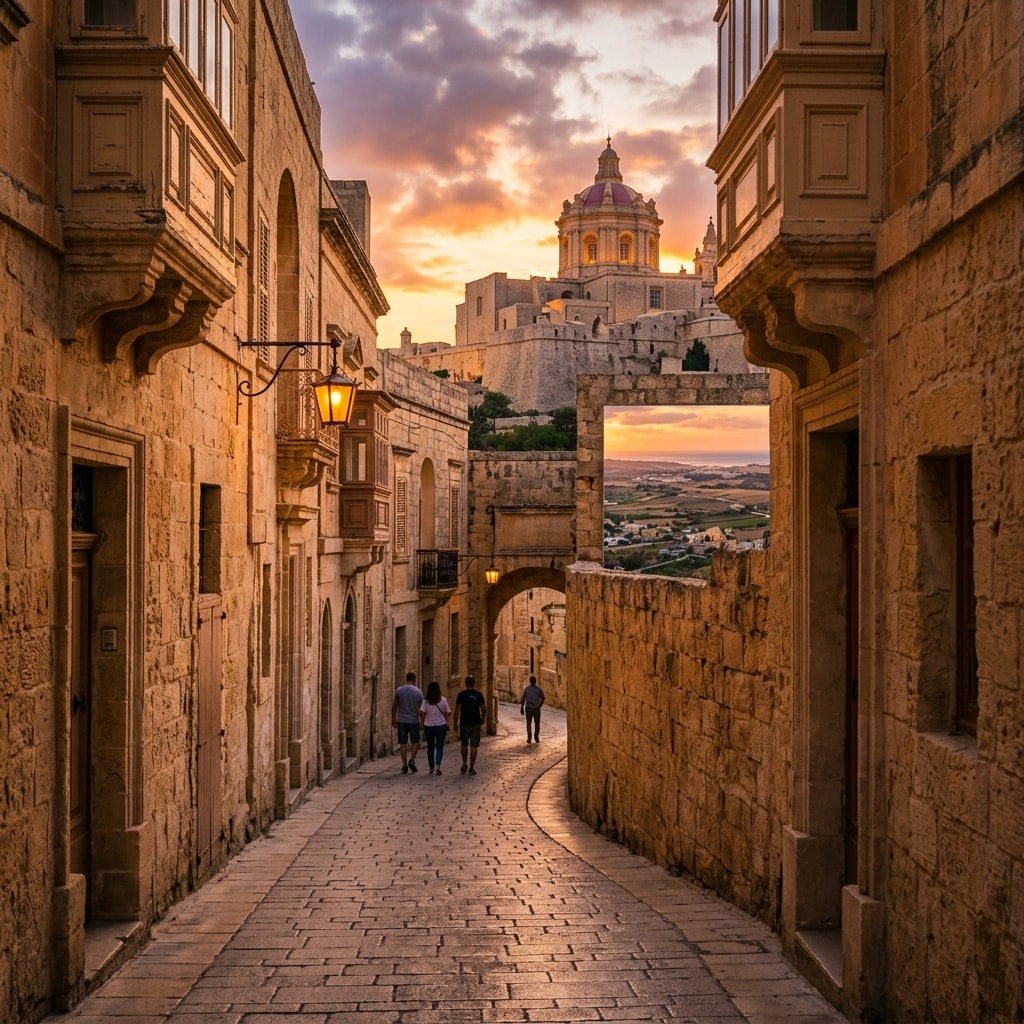
Discover central locations in Malta and Gozo that you should visit during your trip. This includes cities like Valletta, the capital with its historical sights, or Mdina, the silent city. Additionally, you'll learn more about the impressive beaches and picturesque villages that shape the landscape.Traditions and Festivals
In this section, you'll learn more about the diverse traditions and festivals that characterize Malta and Gozo. From colorful carnival celebrations to religious processions, each event is unique and reflects the culture of the islands. Also, find out about culinary festivals where local delicacies take center stage.Culinary Terms
An important part of your trip is the culinary experiences. Here you'll find an overview of typical Maltese dishes and ingredients. Whether it's "pastizzi," the popular pastry pockets, or "fenek," the traditional rabbit dish – you'll discover many new flavors.Nature and Landscape
Learn about the unique flora and fauna of the Maltese islands. From breathtaking cliffs to hidden coves, there are many natural wonders to explore. Here, you'll also find more information about nature reserves and hiking trails that are perfect for exploration.Practical Tips
Here, we provide you with useful hints for your stay. This includes information about public transport, tips for getting around between the islands, and recommendations for accommodations and activities. This way, you'll be well-prepared and can fully enjoy your trip.Cultural Peculiarities
In this section, you'll learn more about the cultural peculiarities of Malta and Gozo. This includes customs passed down from generation to generation, as well as the multicultural influences that have shaped society. Understand the backgrounds of art, music, and architecture that make Malta so special.The Malta Lexicon is your useful source for better understanding the diversity and richness of Maltese culture and landscape. Use this knowledge to make your trip unforgettable.