Malta is much more than sun, sea, and a destination for the classic Mediterranean holiday. The Maltese archipelago combines millennia-old history with small bays, historic cities, Mediterranean villages, and a lifestyle that varies distinctly between Malta, Gozo, and Comino. This very mix makes the islands interesting – and it’s worth taking a closer look before traveling.
Malta Isle helps you not only visit Malta but also get to know the islands better. We live here ourselves and gather places, sights, and experiences that we have personally visited. Instead of listing as many attractions as possible, we want to show you what is truly worthwhile and how you can make the most of your time in Malta and Gozo.
Malta, Gozo, and Comino: three islands, three characters
When people talk about Malta, they often mean the main island. However, the Republic of Malta consists of an archipelago, the three most well-known islands being Malta, Gozo, and Comino. Although they are only a few kilometers apart, they differ significantly.
Malta is the urban and cultural center. Here you will find the capital Valletta, the historic city of Mdina, the Three Cities, and a large part of the restaurants, hotels, shops, and nightlife. The island is densely populated and feels particularly livelier around Valletta, Sliema, and St. Julian’s than many visitors expect before their first trip.
Gozo, in contrast, offers a strong contrast. The smaller neighboring island is more rural, greener, and quieter. Between the towns, there are fields, valleys, cliffs, and small bays. Life focuses less on large cities and more on villages and small coastal towns. Therefore, those who combine Malta and Gozo experience two very different sides of the country.
Comino, with about 3.5 square kilometers, is yet another world. The small island between Malta and Gozo is almost uninhabited and is mainly known for its clear waters and the Blue Lagoon. While Malta and Gozo are independent travel destinations, Comino is particularly suitable for a day trip or a stay on the water.
The main island of Malta
With an area of about 246 square kilometers, Malta is the largest island of the archipelago. In a relatively small space, historic cities, modern urban areas, rocky coasts, bathing bays, and millennia-old buildings come together.
Distances often appear shorter on the map than they feel in everyday life. Traffic and dense construction can mean that a few kilometers take significantly longer than expected. Therefore, it is worthwhile to plan excursions geographically and not switch between different ends of the island every day.
At the same time, Malta's compact size makes many things easy. You can walk through a centuries-old city in the morning, be by the sea in the afternoon, and spend the evening in one of the lively coastal towns.
Valletta: Malta's historic capital
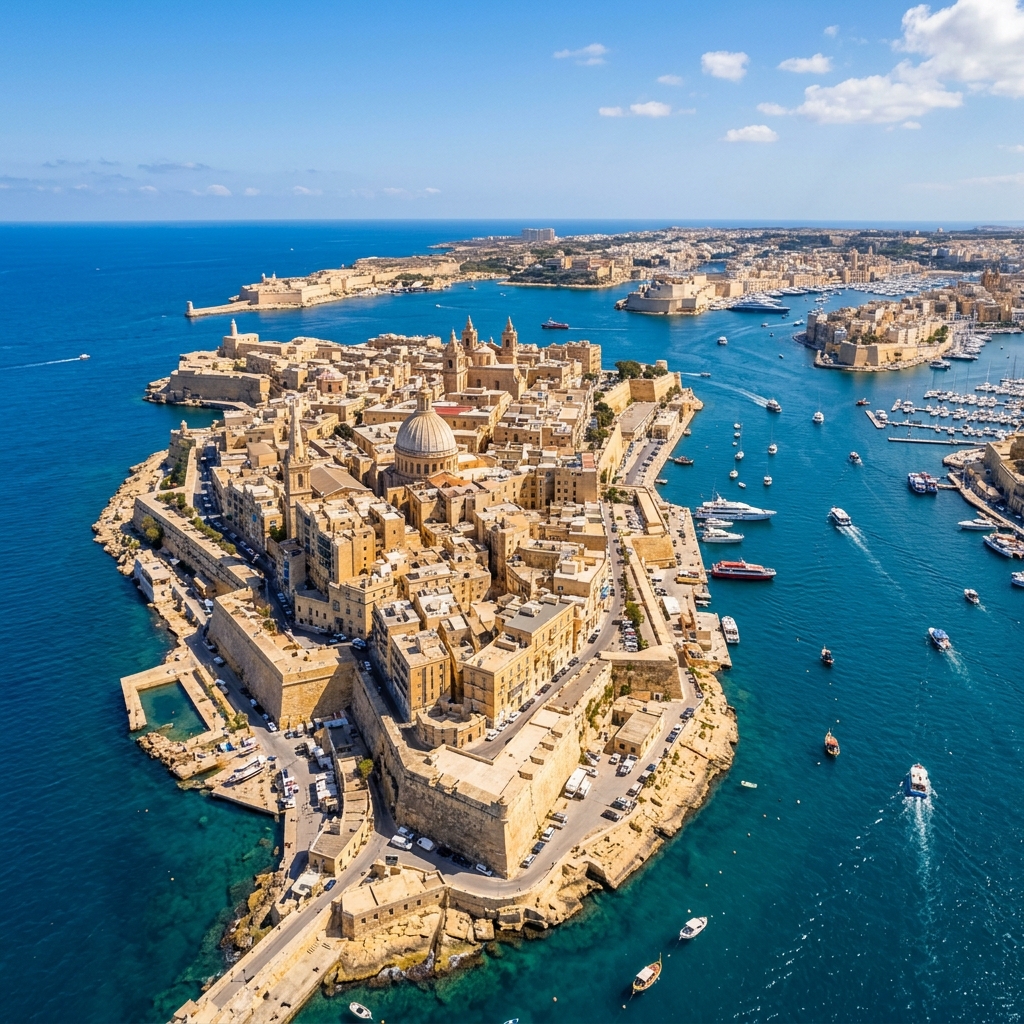
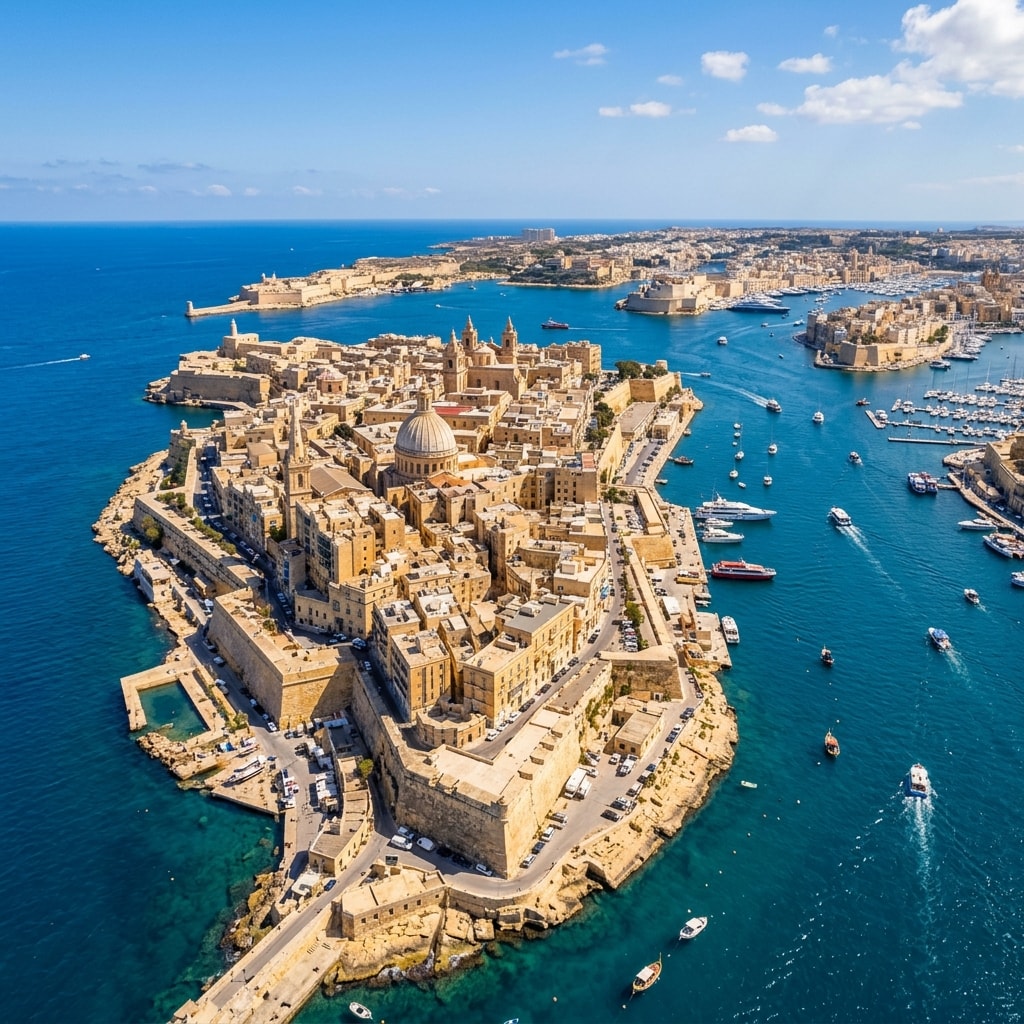
Valletta is one of the most important places to discover Malta. The capital is located on a peninsula between the Grand Harbour and Marsamxett Harbour and can be excellently explored on foot.
The city was established after the Great Siege of 1565 under the Order of St. John. Even today, powerful fortifications, historic palaces, churches, and the characteristic streets define the cityscape. However, behind the representative architecture lies not just a museum city. Between the historic facades, you will find restaurants, small bars, shops, apartments, and a typical Maltese everyday life.
Among Valletta's most famous sights is St. John’s Co-Cathedral. Its relatively understated exterior stands in stark contrast to the richly decorated interior. Here you will also find Caravaggio's famous painting "The Beheading of Saint John the Baptist."
Just a few minutes' walk away are the Upper Barracca Gardens. From here, you have one of the most famous views of Malta over the Grand Harbour to the opposite Three Cities. Directly below is the Saluting Battery.
Therefore, you should not only view Valletta as a single sight. Take your time to walk through the side streets, discover the different levels of the city, and enjoy the view of the harbour.
Mdina: the quiet side of Malta
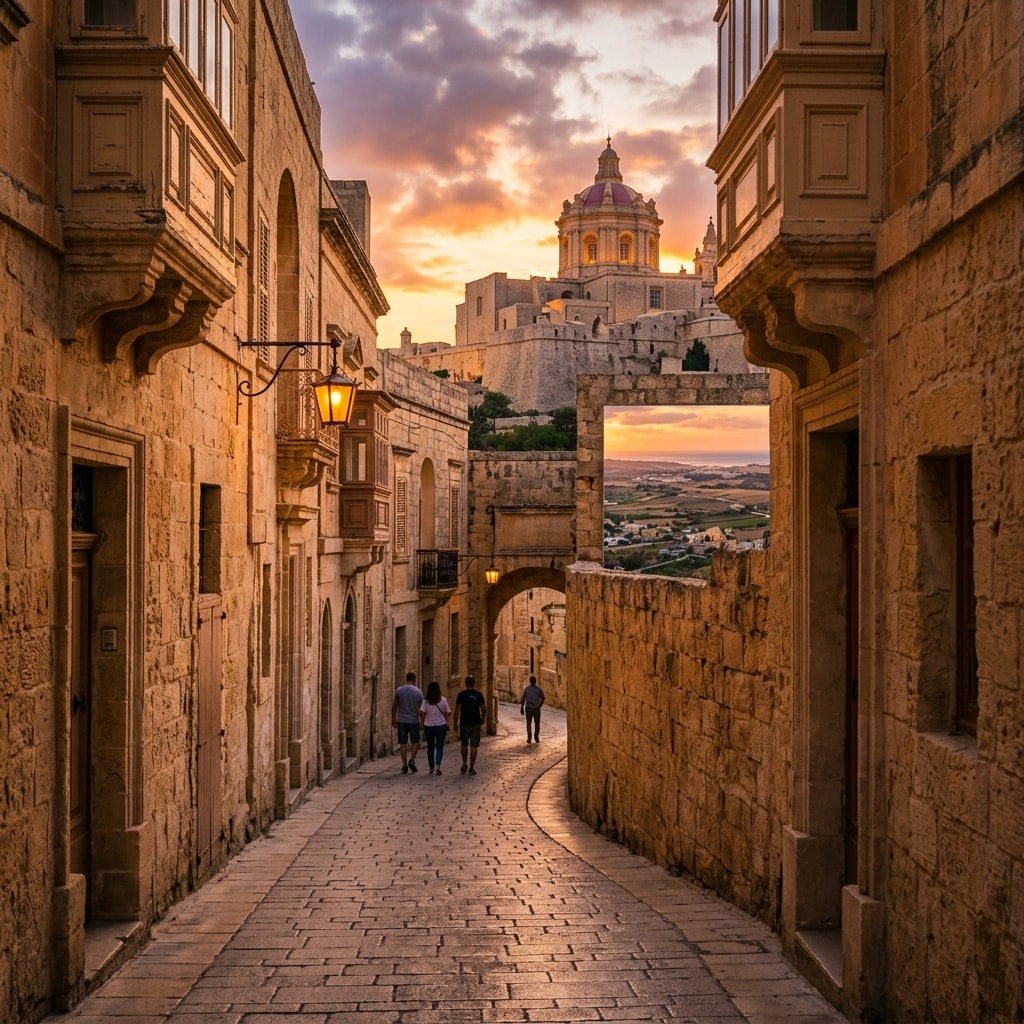
While Valletta is shaped by the sea and the history of the Order of St. John, Mdina showcases a different era of Malta. The former capital is situated on a hill in the interior and is completely surrounded by historic walls.
Mdina is often referred to as the "Silent City." Within the walls, only a few people live, car traffic is heavily restricted, and the narrow streets create a special atmosphere, especially in the early morning and evening.
The historic Mdina Gate leads into a network of small alleys, palaces, courtyards, and churches. From the bastions, the view extends far over the island. Due to its elevated position, it is particularly easy to see how compact Malta truly is.
Just outside the city walls begins Rabat. Both places can be easily connected. In Rabat, among other things, you will find St. Paul’s Catacombs, an extensive underground burial system from late antiquity.
If you want to experience Mdina, it is worth not just stopping by for a quick photo at the city gate. Especially when the larger tourist groups have disappeared, it becomes clear why this place is one of Malta's special historic cities.
The Three Cities and the Grand Harbour
On the opposite side of Valletta lie Vittoriosa, Senglea, and Cospicua, collectively known as the Three Cities. They are among the historically significant areas of Malta and are often overlooked during short trips.
Especially Vittoriosa, known in Maltese as Birgu, is worth a longer walk. Small streets, traditional houses, and the direct location by the Grand Harbour provide a different impression than the much more frequented Valletta.
The Three Cities can be easily combined with a visit to the capital. Due to their location at the Grand Harbour, you will also get a better sense of the significance this natural harbour had for Malta's history.
Malta is an island for history enthusiasts
The history of Malta begins long before Valletta, Mdina, or the Order of St. John. The islands are home to some of the oldest free-standing stone structures in the world.
Prehistoric temple complexes, Phoenician and Roman traces, early Christian catacombs, Arab influences, and the centuries-long rule of the Order of St. John have left their mark. Later, Malta became part of the British Empire. This period is still visible today – for example, in the left-hand traffic or the widespread use of the English language.
As a result, you will encounter historical influences in Malta not only in museums. They are part of the architecture, place names, churches, and everyday life.
Malta and the sea
The sea is inseparable from Malta. However, the coast is predominantly not made up of kilometers of sandy beaches. Rocky bays, natural swimming spots, small harbours, and sections with exceptionally clear water are typical.
This is precisely what attracts many visitors. You can swim, snorkel, dive, or explore the coast by boat. Malta is also regarded as an established diving destination in the Mediterranean.
There are sandy beaches as well. Depending on where you stay in Malta, you should not assume that there will automatically be a classic sandy beach right in front of your hotel. Those primarily traveling for swimming should choose their accommodation accordingly.
Gozo: Malta's quieter neighboring island
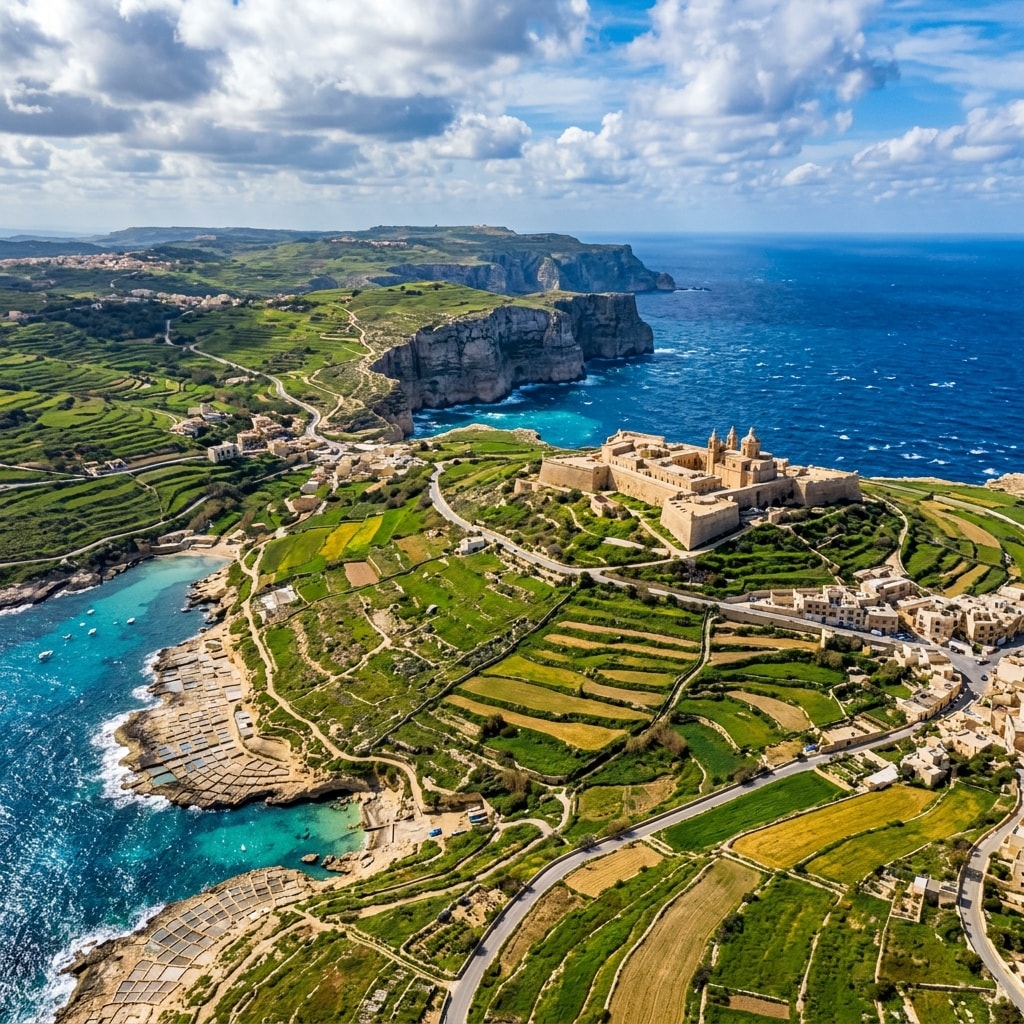
Gozo is about 67 square kilometers in size and feels much more expansive than Malta. The difference often becomes apparent shortly after arrival: less dense construction, more agriculture, smaller towns, and significantly more open landscapes.
We live on Gozo ourselves and experience this difference daily. For us, the island is not just a day trip destination but our home and a central part of Malta Isle.
In the center of Gozo lies Victoria, known in Maltese as Rabat. Above the city rises the historic citadel. From its walls, the view extends over large parts of the island.
On the northern coast are the salt pans of Xwejni. The geometric basins along the rocky coast are among Gozo's most characteristic landscapes. In some areas, sea salt is still harvested in traditional ways today.
One of the most significant historical sights is the Ġgantija Temples near Xagħra. This megalithic site was built thousands of years before our era and is part of the UNESCO World Heritage.
For those looking for a classic beach, Ramla Bay offers one of the island's most distinctive bays. Its reddish-gold sand sets it apart from many rocky swimming spots in Malta and Gozo.
Gozo is worth more than just a day trip
Many travelers to Malta visit Gozo for only a few hours. While this is enough for a first impression, it hardly does justice to the island.
Gozo changes its character as soon as the day visitors are on their way back to the ferry. In the evenings, the villages become quieter, restaurants and squares fill with locals, and longer walks along the coast can be explored without time pressure.
If your trip is long enough, it may be worthwhile to spend a few nights in Malta and a few in Gozo. This way, you won’t have to try to cram both islands into individual day programs.
Comino and the Blue Lagoon
Between Malta and Gozo lies Comino. The small island is especially known for the Blue Lagoon. Its exceptionally clear, turquoise water has made it one of Malta's most famous photographic motifs.
However, this popularity has a downside. During the peak season, it can get very crowded around the Blue Lagoon. Those who want to experience Comino more peacefully should consider the time of day and season and not focus solely on the most well-known section.
From the water, Comino also shows itself from a particularly interesting side. Coves, caves, and the rocky coastal landscape make the island a good destination for boat trips and day excursions between Malta and Gozo.
Do you need a car in Malta?
Not necessarily. Malta and Gozo have an extensive bus network, and the islands are connected by ferries. Especially if you mainly want to visit Valletta and other well-connected places, you can plan a stay without a rental car.
A car, on the other hand, gives you more flexibility in remote bays, smaller towns, and spontaneous excursions. In Gozo, the distances are short, so many destinations can be reached quickly.
However, you should keep in mind that Malta has left-hand traffic. Especially in densely built areas, the roads can be narrow, and finding parking can take time. A rental car is therefore not an automatic advantage for every travel day.
When is the best time to visit Malta?
Malta is generally a year-round destination, but the experience changes significantly depending on the season.
In summer, sun, sea, boat trips, and long evenings are the focus. At the same time, July and August can be very hot and heavily visited. Historic cities and longer hikes can be more strenuous in high temperatures.
Spring and autumn are particularly interesting for many travelers because sightseeing, activities, and days by the sea can be better combined. In spring, Gozo, in particular, appears much greener than during the dry summer months.
Winter also has its charm. The islands are quieter and are well-suited for culture, restaurants, and longer walks. However, those expecting a classic beach holiday should consider that the weather can be more changeable during this time.
Malta also means Maltese everyday life
Those who get to know Malta solely through the most famous sights see only a part of the islands.
Malta includes village festivals, small squares, local bakeries, fishing ports, seaside restaurants, and an everyday life that feels significantly different outside the tourist centers. Especially in Gozo, the individual villages and their communities play an important role.
It is therefore worthwhile to consciously plan time during your trip without a packed itinerary. Sit in a café, drive to a smaller coastal town, or spend an evening where not every street is part of a classic sightseeing route.
Discover Malta with Malta Isle
Malta Isle was born from this very idea. Originally, we created a simple collection of links and personal recommendations for friends, family, and visitors. We didn’t want to explain every time which ferry to take, where we like to eat, or which places we would show visitors.
Over time, this collection was used by more and more people. This led to the creation of Malta Isle.
Today, we want to provide you with a guide that connects the well-known sights with practical local experience. We do not simply present places, restaurants, experiences, and events because they are famous. We personally check recommendations and partners on Malta Isle and visit the relevant locations or offers ourselves.
This does not mean that we have to find every place in Malta equally good for everyone. Travel is subjective. Our aim is rather to provide you with enough honest information so that you can decide for yourself what suits your trip.
Don’t just plan Malta – discover the islands
Malta can be quickly grasped on a map. However, you cannot truly get to know the country in just one day.
Valletta tells the story of the Knights and the Grand Harbour. Mdina takes you further back into the island's history. The coast shows you a Malta of rocks, bays, and clear Mediterranean waters. Gozo slows down the pace, while Comino is almost entirely defined by the water.
These very differences make the Maltese archipelago.
Therefore, do not use Malta Isle as a list to tick off point by point. Choose the places that interest you, leave enough time in between, and also discover Malta and Gozo beyond the most famous sights.
Because in the end, it is often not the most visited places that make a good Malta trip – but the right ones.